 Found a mistake on the site? Tell us:

 Telegram
 укр
укр рус
рус AgriCatalogue

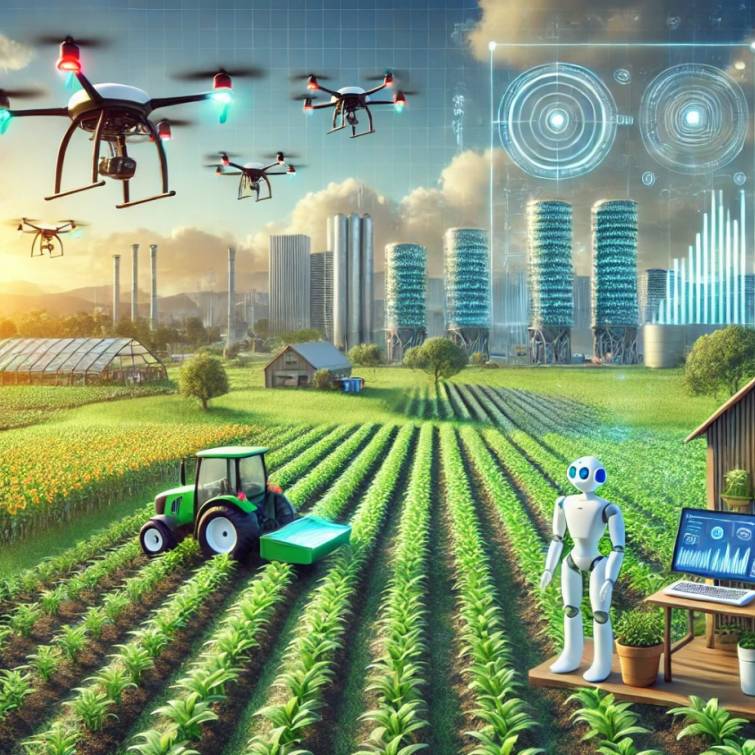
Innovations in Agriculture: How Technology is Transforming the Agro-Sector
Agriculture is no longer just about growing crops and raising livestock. It is a complex process where modern technologies play an increasingly significant role. With the introduction of innovative solutions, the agro-sector is undergoing a revolution, changing traditional methods and opening new horizons. Let us explore the key technologies that are already transforming agriculture today.
Smart Farms and the Internet of Things (IoT)
One of the most promising directions in the agro-sector is the Internet of Things (IoT). Using sensors and connected devices, farmers can obtain data on soil conditions, humidity levels, temperature, and other parameters. This data helps to:
- Optimize irrigation, avoiding water overuse;
- Detect plant diseases at early stages;
- Prevent crop losses through timely actions.
An example of such solutions is smart monitoring systems that track the state of fields in real-time and send notifications to smartphones or computers.
Drone Usage
Unmanned aerial vehicles have become an indispensable tool in modern agriculture. They are used for:
- Aerial photography of fields, enabling the assessment of their condition;
- Application of fertilizers and pesticides;
- Evaluating plant density.
Drones significantly reduce costs for field processing and make this process more precise and environmentally friendly.
Automation of Processes
Automated systems, such as robots for milking cows, harvesting crops, or planting seeds, have already become a reality. These technologies allow:
- Reducing the need for manual labor;
- Increasing productivity;
- Improving the accuracy of tasks.
For example, robots for harvesting crops can work around the clock, ensuring timely collection even when there is a labor shortage.
Artificial Intelligence and Big Data
Artificial Intelligence (AI), combined with big data, enables forecasting crop yields, determining optimal planting and harvesting times, and identifying potential risks. AI-based systems analyze large datasets, including weather conditions, soil health, and historical crop data.
An example of such technologies is platforms that help farmers make more informed decisions, reducing costs and increasing efficiency.
Biotechnology and Genetics
Modern biotechnologies open up new possibilities for creating crops resistant to diseases and climate changes. Genetically modified plants provide:
- Higher yields;
- Resistance to drought and pests;
- Reduced need for chemical fertilizers and pesticides.
These technologies are particularly relevant in the context of climate change, where farmers face new challenges.
Vertical Farms
With increasing urbanization, the concept of vertical farms is becoming increasingly popular. These multi-level structures allow the cultivation of vegetables and greens in urban environments. Vertical farms offer several advantages:
- Water savings through closed-loop systems;
- The ability for year-round cultivation;
- Reduced logistics costs due to proximity to consumers.
Benefits and Challenges
The implementation of technologies in agriculture brings numerous benefits, including:
- Increased productivity;
- Reduced costs;
- Lower environmental impact.
However, challenges remain. These include the high cost of technology implementation, the need for staff training, and the adaptation of traditional methods to new realities.
Conclusion
Innovations are transforming agriculture, making it more sustainable, productive, and environmentally friendly. Despite the difficulties that may arise during the implementation of technologies, their benefits are clear. By leveraging IoT, drones, AI, and other solutions, farmers can not only improve the efficiency of their work but also tackle global challenges such as climate change and population growth. The future of the agro-sector lies in technology.