 Found a mistake on the site? Tell us:

 Telegram
 укр
укр рус
рус AgriCatalogue

Export of grain from Ukraine exceeded 2 million tons - who needs it and what prevents it from being obtained
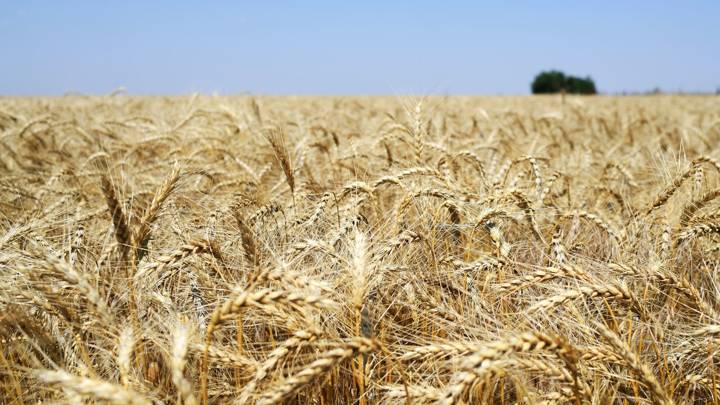
The volume of exports of grain and leguminous crops from Ukraine in the 2023/24 marketing year as of July 28 amounted to 2.05 million tons, which is 46% more than the same figure last season. Who is interested in it and who is hindered by Ukrainian exports during the war - more on that below.
Currently, it is known that the countries of the Persian Gulf have already become involved in the grain issue, which came out with a unified position regarding the grain agreement. In particular, the Secretary General of the Cooperation Council of the Persian Gulf countries, Jasem Albudayvi, said that the region has no differences regarding the grain agreement and everyone insists on the continuation of the initiative. According to him, the restoration of the operation of the Black Sea Corridor is important for the export of grain, food and all humanitarian supplies, which will contribute to ensuring food security for a number of countries. Additionally, during a meeting with the Ambassador of Ukraine to Saudi Arabia, Anatoly Petrenko, at the headquarters of the General Secretariat in Riyadh, the politician voiced the position of the Gulf Cooperation Council regarding Russia's war against Ukraine. According to Albudaivi, it is based on the principles of international law and the preservation of the international order based on respect for sovereignty and territorial integrity.
But Russian President Vladimir Putin ignored the request of Turkish President Recep Tayyip Erdogan to negotiate a return to the grain agreement. Erdogan has said repeatedly in recent weeks that he plans to speak with Putin to revive the deal, but a phone call has not yet taken place, according to a number of sources. For now, Turkish officials continue to press the issue through various channels in the Kremlin, where the grain deal has been abandoned after Erdogan took a series of steps that show his foreign policy is seemingly turning away from Russia and toward the West. So, for example, Erdogan angered Russia when he gave Ukraine commanders from "Azovstal" and is not opposed to approving Sweden's accession to NATO.
Currently, Russia is trying to establish its hegemony in the Black Sea and has moved from statements to active actions, openly intimidating civilian vessels and threatening them with destruction. Threats from the Russians are heard in the open channels of sea communication - they openly warn the ships going through the Black Sea that if their navigation is directed to the ports of Ukraine, they will be destroyed. Note that navigation to and from ports controlled by Ukraine is currently unavailable, as the warning issued by Russia at the beginning of the full-scale invasion remains in effect. Since March 2022, the terrorist country has closed the northwestern part of the Black Sea, declaring that a counter-terrorist operation is being conducted there. Then more than 100 ships became hostages of the situation. Subsequently, within the framework of the grain initiative, the ships to which it applied began to leave the ports. But there are still container ships and boats that are not covered by the agreement. At the same time, only in the last 9 days, as a result of Russian attacks, 26 objects of the port infrastructure of Ukraine and 5 civilian ships were damaged and partially destroyed. The Russians are also restricting navigation in the area of the temporarily occupied Crimea and near the territorial waters of Bulgaria. The obvious purpose of which is to deprive the world of Ukrainian food, thus creating a global food crisis.
However, experts of the Institute for the Study of War believe that Russia is unlikely to be able to implement the blockade of the Black Sea. According to the institute's review, the Russian Black Sea Fleet is increasing its military presence in the Black Sea, likely in an effort to create conditions for the forced stop and search of civilian vessels and to strengthen control in the region. The Ministry of Defense of Ukraine and Great Britain reported that Russian forces are preparing ships in the Black Sea to ensure the blockade of Ukraine. However, the Black Sea Fleet is unlikely to be able to implement a complete blockade of Ukraine. After all, a complete Russian blockade of Ukraine in the Black Sea would mean that Russian forces could open fire on all vessels trying to reach Ukraine. Russia is unlikely to try to implement such a complete blockade so as not to provoke a military conflict with the Black Sea littoral countries, including NATO members Romania, Bulgaria and Turkey. Experts note that Russia's current position in the Black Sea most likely indicates that it is creating conditions for the search of civilian and commercial vessels, while positioning the blockade as a means of obtaining additional leverage.
At the same time, experts believe that Ukraine can export agricultural products even without Russia, because over the past year, Ukraine has established alternative ways of exporting grain and is ready to continue exporting even without the participation of Russia, in particular by land and through the Danube ports, through which it is already possible to ship 2, 5-3 million tons of grain every month. And the introduction of additional measures will allow to increase this volume to 4-4.5 million tons per month. In addition, negotiations are ongoing with the European Commission regarding the granting of discounts to European carriers that transport Ukrainian grain to Western European countries.
But what Russia's actions have already provoked is an increase in the price of wheat on the CBOT to the maximum of the last 5 months. According to the results of trading on July 24 on the CBOT exchange, wheat quotations for the September contract increased by $22 per ton compared to the price of the previous trading day and reached $278.3 per ton, which is the highest figure in the last 5 months.
After that, the African Union, which includes 55 countries, called for the immediate restoration of the UN-brokered agreement that allowed Ukraine to export grain through the Black Sea, which was suspended at the behest of Russia. This statement was made by the President of the Comoros Islands, Azali Assoumani, who heads the African Union. Reuters, analyzing the summit, writes that the African leaders at the summit generally put pressure on Putin to stop the war against Ukraine. Although they did not criticize Russia, their speeches on the second day of the summit with Putin were more coherent and decisive than those that African countries have voiced so far. They reminded the Kremlin leader of the depth of concern of Africans and the whole world about the consequences of the war, especially the rise in food prices.