 Found a mistake on the site? Tell us:

 Telegram
 укр
укр рус
рус AgriCatalogue

The EU has extended the "transport visa-free regime" with Ukraine
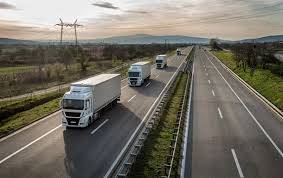
The agreement on the liberalization of freight transport between Ukraine and the European Union has been extended until December 31, 2025. According to Oleksiy Kuleba, Minister of Community and Territory Development, the decision to extend the "transport visa-free regime" was made automatically thanks to the coordinated work of the Ukrainian side and the European Commission.
According to the government official, during the agreement, the volume of both exports and imports increased - exports by road to the EU increased by 42%, and imports by 37%. And now, despite the war, the movement of goods remains stable.
Currently, road transport between Ukraine and the EU is crucial for Ukraine's economic stability, as the country exports value-added goods and imports necessary goods by road. According to him, the Agreement is beneficial not only for Ukraine, but also for the countries of the European Union.
It is reminded that the "transport visa-free regime" was approved in June 2022 for a period of one year. In 2023, the document was already extended, and the next update in June 2024 provided for the possibility of automatic prolongation until December 31, 2025 - provided there are no serious violations or negative consequences for the parties. From now on, according to the provisions of the agreement, which is valid until the end of 2025, Ukrainian carriers have the right to carry out transportation to the EU and in transit through it without restrictions on the number of permits. The sale or transfer of these rights is prohibited. In turn, the EU expects compliance with technical requirements and safety from Ukrainian transport companies.
It should be noted that since the beginning of the full-scale invasion of the Russian Federation, the Ukrainian economy has suffered significant losses. In particular, the agricultural sector has been severely affected - direct losses and damages as a result of the full-scale Russian invasion exceed $80 billion. In these circumstances, the EU's autonomous trade measures have played an important role in supporting the activities of Ukrainian exporters. This decision has also had a positive impact on the Ukrainian dairy sector - more than 50 enterprises have received permits to export their products to EU countries, quickly reorienting supplies across the western border. Currently, exports, including agricultural products, are important not only for the Ukrainian economy, but also for ensuring food security. In the context of hostilities, the Ukrainian agro-industrial complex is facing unprecedented difficulties, and the EU's autonomous trade measures allow for rapid adaptation to logistical disruptions and changes in transport routes.
It is noted that, according to the results of 2024, Ukraine increased its exports of agricultural products to the European Union by 11%. The EU continued to import agricultural food products from various trading partners, among which the main sources were Brazil, the United Kingdom and Ukraine. Imports increased from Côte d'Ivoire, Ukraine and Nigeria, and decreased from Russia and Australia. Ukraine was the third largest source of agri-food imports to the EU in 2024 - 8% of the total value of EU imports. Agricultural imports from Ukraine to the EU increased by 11% compared to 2023 and reached EUR 13 billion. This is due to an increase in the share of two key commodities in imports: vegetable oils, as well as oil and protein crops. The total volume of European agricultural imports in 2024 reached a record EUR 171.8 billion. In terms of consumption of European agricultural exports, Ukraine ranks 13th, with a figure of EUR 3.634 billion, which is about two percent of total EU agricultural exports.
Speaking about the trade regime, it should be added that in the first three months of 2025, goods worth a total of $18.5 billion were imported into Ukraine, and $9.9 billion were exported. Thus, the total trade turnover for the first quarter is $28.4 billion. According to the State Customs Service of Ukraine, the countries from which the most goods were imported into Ukraine during this period were China - $3.9 billion, Poland - $1.7 billion and Germany - $1.5 billion. The most exports from Ukraine were to Poland - $1.1 billion, Italy - $680 million and Spain - $650 million. The three most exported goods from Ukraine in January-March included food products ($5.8 billion), metals and articles thereof ($1.1 billion), as well as machinery, equipment and transport ($882 million). And during customs clearance of exports of goods subject to export duties, UAH 81.2 million was paid to the budget.