 Found a mistake on the site? Tell us:

 Telegram
 укр
укр рус
рус AgriCatalogue

The Poles can ban the transit of Ukrainian agricultural products
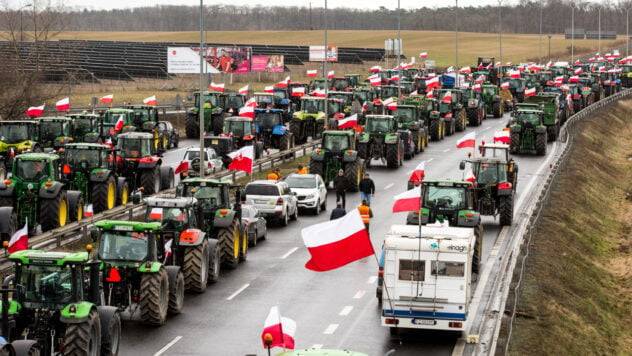
Currently, it is expected that the next round of negotiations between the Polish government and protesting farmers will end with the signing of agreements on the allocation of subsidies to grain producers and the temporary closure of the border with Ukraine for the transit of certain types of agricultural products. As reported by Polish Radio, the corresponding document was signed by representatives of the protesting farmers, as well as the Minister of Agriculture of Poland Czeslaw Siekerski and the State Secretary of this Ministry, Michal Kolodziejczak.
This agreement provides for the preservation of the current embargo on agricultural products from Ukraine, which has been in effect since mid-September last year. This applies, in particular, to wheat, corn, wheat flour, rape and sunflower. In addition, the Minister of Agriculture should appeal to the Polish government to suspend the transit of the specified products through the territory of the country from April 1 of this year. In addition, the parties supported the need to develop detailed rules for trade in agri-food products between Poland and Ukraine, stressing that the difficult situation in Poland's agriculture is a consequence of Russia's aggression against Ukraine.
For now, the main demands of the protesting Polish farmers remain unchanged. They demand the softening of the provisions of the European "green agreement" and the closing of borders from the arrival of agri-food products from outside the EU countries. It should be noted that they have been protesting for several months. Their main demands are the cancellation or relaxation of restrictions imposed by the EU's Green Deal plan aimed at combating climate change, as well as the reinstatement of customs duties on agricultural imports from Ukraine, which Brussels canceled after Russia launched a full-scale war against Ukraine in 2022. .
In turn, the European Commission decided not to extend restrictions on the import of Ukrainian agricultural products after September 15. After analyzing data on the impact of exports of 4 categories of agricultural products on the EU market, the institution concluded that thanks to temporary measures introduced on May 2, 2023, market distortions in 5 member states bordering Ukraine have disappeared. Accordingly, an agreement was reached that all measures to limit the import of Ukrainian agricultural products are currently no longer valid. In addition, Ukraine agreed to implement any legal measures (including, for example, an export licensing system) within 30 days to avoid a spike in grain prices.
It is also known that the Parliament and the Council of the European Union reached a preliminary agreement on the continuation of trade liberalization measures for Ukraine. The temporary suspension of import duties and quotas for the export of Ukrainian agricultural products to the EU will be extended for one more year, until June 5, 2025, in order to support Ukraine in the conditions of an ongoing aggressive war. The Commission can take swift action and apply any measures it deems necessary if significant disruptions occur in the EU market or the markets of one or more EU countries due to Ukrainian imports. The resolution also provides for emergency braking of particularly sensitive agricultural products, namely poultry, eggs and sugar.
As previously reported, the European Union is preparing to impose tariffs on grain imports from Russia and Belarus to appease farmers and some member states. This will be the first restriction on Russian food products since the full-scale invasion of Ukraine.