 Found a mistake on the site? Tell us:

 Telegram
 укр
укр рус
рус AgriCatalogue

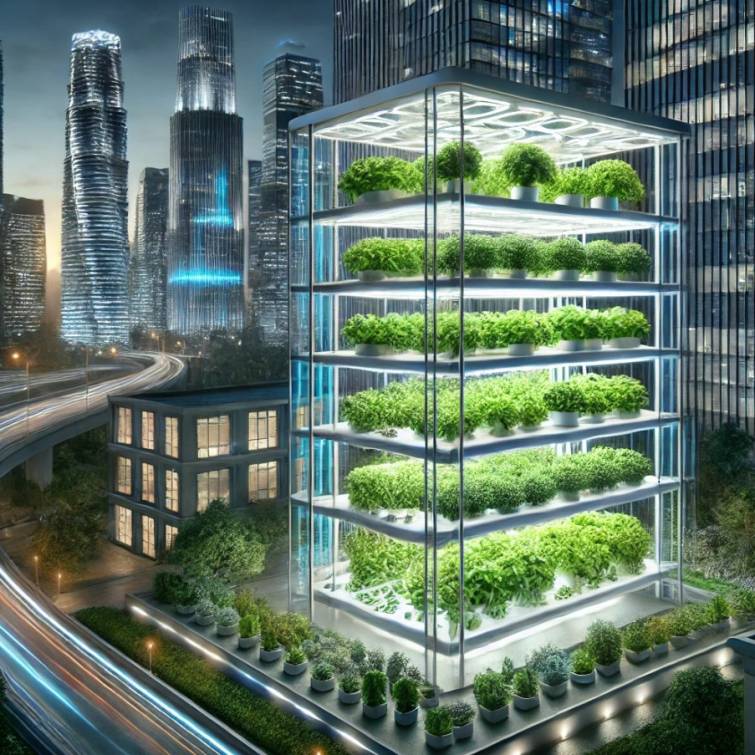
Vertical Farms: The Future of Urban Agriculture
With urbanization on the rise and the decreasing availability of arable land, vertical farms are becoming an increasingly popular solution. This innovative system of plant cultivation involves multi-level structures used to grow crops in controlled indoor environments. Vertical farms integrate hydroponics, aquaponics, and aeroponics technologies, creating a sustainable alternative to traditional farming.
Benefits of Vertical Farms
- Space Efficiency: Vertical farms require less land thanks to their multi-level design, making them ideal for cities.
- Water Conservation: Closed-loop hydroponic and aeroponic systems use water more efficiently.
- Year-Round Growing: Controlled environments allow crops to be grown regardless of the season.
- Eco-Friendliness: Reduced carbon emissions due to less transportation and the absence of pesticides.
- Fresh Produce in Cities: Vertical farms can be located closer to consumers, reducing delivery times.
Challenges of Vertical Farming
- High Setup Costs: Establishing vertical farms requires significant initial investments.
- Energy Consumption: Continuous lighting and climate control increase energy usage.
- Technical Complexity: Specialized equipment and skilled maintenance are essential.
Prospects
Vertical farms are already being implemented in major cities like Tokyo, New York, and Singapore. As technology advances, the cost of setting up and operating these farms continues to decrease. Vertical farms could become a vital part of sustainable food systems, especially in the face of population growth and climate change.
Conclusion
Vertical farms represent a revolutionary approach to agriculture that addresses modern challenges. Despite high initial costs, their benefits in terms of sustainability, productivity, and fresh produce availability make them a promising solution for the future of urban areas.